From conglomerate chiefs to emerging designers, artists and editors, our inaugural ranking honors those driving one of the century’s great retail transformations and a new creative wave.
Former Dior Men designer Kim Jones is betting on the horizontal mall, labelled a biodiversity-led ‘groundscraper.’
Instead of adapting global products with local colorways, a Shanghai team now shapes silhouettes, fabrics and fit from scratch.
Luxury brands are moving into pet care as China’s owners spend more on grooming, fragrance and shared-home rituals.
Queen Wen’s wild-card Beijing title lifts her $22.6 million sponsor profile, ticket revenue jumps 48%, a Shanghai sneaker label eyes Le Bon Marché and travelers learn pottery.
Turning founder Ermenegildo’s daily memories into a collection of six scents, the Italian house pivots from licensing to intimate, story-led perfumery.
At the Asia Perfume Show 2026, fragrance brands from China to the Philippines demonstrated fresh approaches to gourmand, performance, and brand expansion.
Songmont, Keigan and The Beast Home turned exhibitions into immersive worlds of Shanxi pagodas, Shanghainese mahjong and longtang laundry lines, exporting identity alongside product.
Rather than chasing scale, the 132-year-old British label is tailoring fits, fabrics and stores to each market — a test of whether authenticity can travel without dilution.
Southeast Asia’s shoe brands are stepping into the spotlight as rising incomes, cultural pride, and social media fuel demand for locally made footwear.
Nearly 100 runway presentations and close to 1,000 brands fill a nine-day Spring/Summer 2027 season where heritage craft meets hard-nosed global commerce.
Some 100 executives to meet at Xi’an SKP October 29-30, with a Golden Goose padel program on the second day.
Meetings may matter less for policy than for the assumptions they change.
Cartier’s owner and the parent of Zales and Kay are reportedly weighing stakes in Gareth Penny’s consortium, a potential lift for natural diamonds battered by China’s slump.
Priced level with Meta’s Ray-Ban frames, the Qwen N1 series bets Chinese shoppers will pay for features over discounts as Hangzhou’s tech giant builds its full-stack strategy.
Sign up for our daily brief on the global business of luxury in Asia.
Craftsmanship, heritage, and timeless design no longer differentiate. As automated shopping strips out the boutique, only a clear brand story can protect desirability.
At home and abroad, a new wave of APAC eyewear players is competing on accessible pricing, localized design, and retail innovation.
Jingdezhen joined the UNESCO World Heritage List in July, weeks before Beijing issued its first industrial policy for the country’s oldest trades. The craft being protected could be the foundation of a distinctly Chinese luxury.
Amid Chinamaxxing and a Kardashian trip to Shanghai, neo-Chinese style continues to gain global traction.
A ninth straight quarterly sales decline, a fragrance label’s shutdown, a marathon runner’s bicycle shortcut and a mooncake dispute that turned on its complainant.
A missed mooncake exposes the gap between what Tiffany promises its Chinese clients and what its service culture can actually deliver.
From heritage goldsmithing to contemporary design, these jewelers are shaping how a new generation wears its wealth.
As Mamonde and Filorga retreat, Fenty Beauty, Pañpuri and Serge Lutens are betting on more selective consumers.
Beauty brands are turning gaming into a space for product discovery, education and commerce, moving far beyond virtual billboards and skins.
Less than a year after entering the Shanghai mall, the Chinese gold jeweler has opened a flagship of more than 350 sqm in its second-floor core.
With luxury spending second only to one country, China is fertile ground for secondhand designer fashion, and Zhu Tainiqi’s company is cashing in.
The Starship girl group’s look has become a commercial force in its own right, and brands can buy into it without licensing any of the members.
The luxury and premium Chinese labels racking up millions of Xiaohongshu impressions and shaping fashion trends.
Kering’s crown jewel lowers prices in China as cautious consumers question luxury value, wait for further reductions and favor gold.
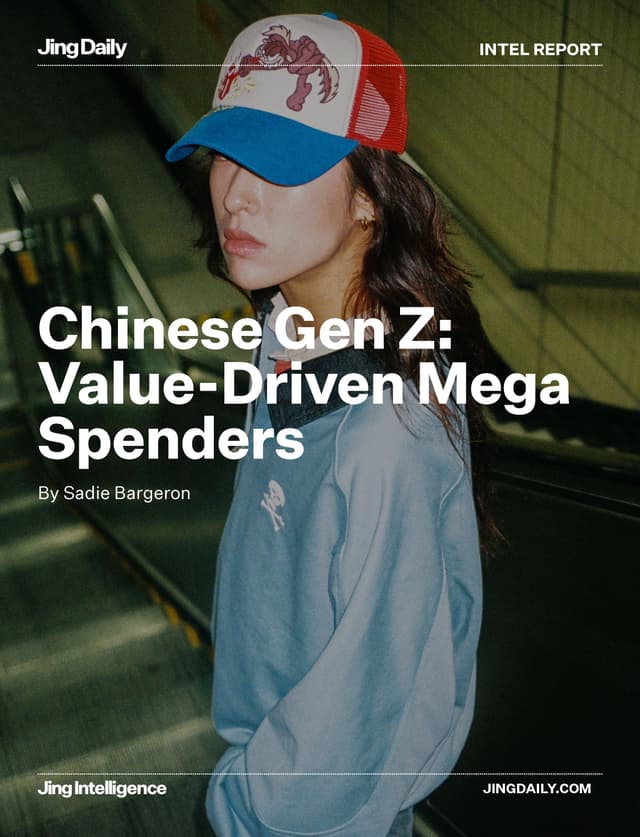
Chinese Gen Z are resurrecting the high-saturation Y2K pop culture aesthetic: the antidote to quiet luxury.
From branded spas to WeChat retail, beauty companies are testing whether hotels can turn prolonged product trials into measurable customer acquisition.
Luxury’s personalized toolkit for business in China. Join now to sharpen your focus.
Have an account? Login